
Protopia, invader and umuntu ngumuntu ngabantu
Vol 2 Issue 5
|
Vol 2 Issue 5 |

A way to look at life
PROTOPIA
It is not Utopia - a world where there are no problems.
It is not Dystopia - a world filled with problems.
Protopia is a world where everything gets better 1% at a time.
Kevin Kelly, who came up with the idea, said this about Protopia:
We aren’t headed to utopia, where everything’s fine.
We’re going to come to a world where things are a little tiny bit better, and we’re just incrementally prototyping our way forward. No massive jumps. Just 1% better.
In the post I have shared, he says that our civilisation has been a never ending sequence of problem -> solution -> problem
Each new solution to a problem creates a new, slightly less dangerous problem.
In the late 1960s, many experts predicted that humanity had lost the battle to grow enough food. They predicted mass starvation and death within a decade.
We solved it by industrialising agriculture.
Which led to the problem of mass pesticide use and overuse of fertilizers.
Which led to the solution of organic farming and biofertiliser. Which will probably lead to some other problem.
Each solution, however, made the world an incrementally better place than what it used to be.
That is the premise of protopia.
I like the idea of looking at life like you are building a prototype. You are testing something out, hoping that it will fix some of the problems you have and make your life better.
You learn from your mistakes and build another prototype.
This one is 1% better than the previous one. It won’t be perfect, but it will be better than what was before.
You can read more about Protopia here
You can also read about Paul Ehrlich’s prediction of mass starvation here
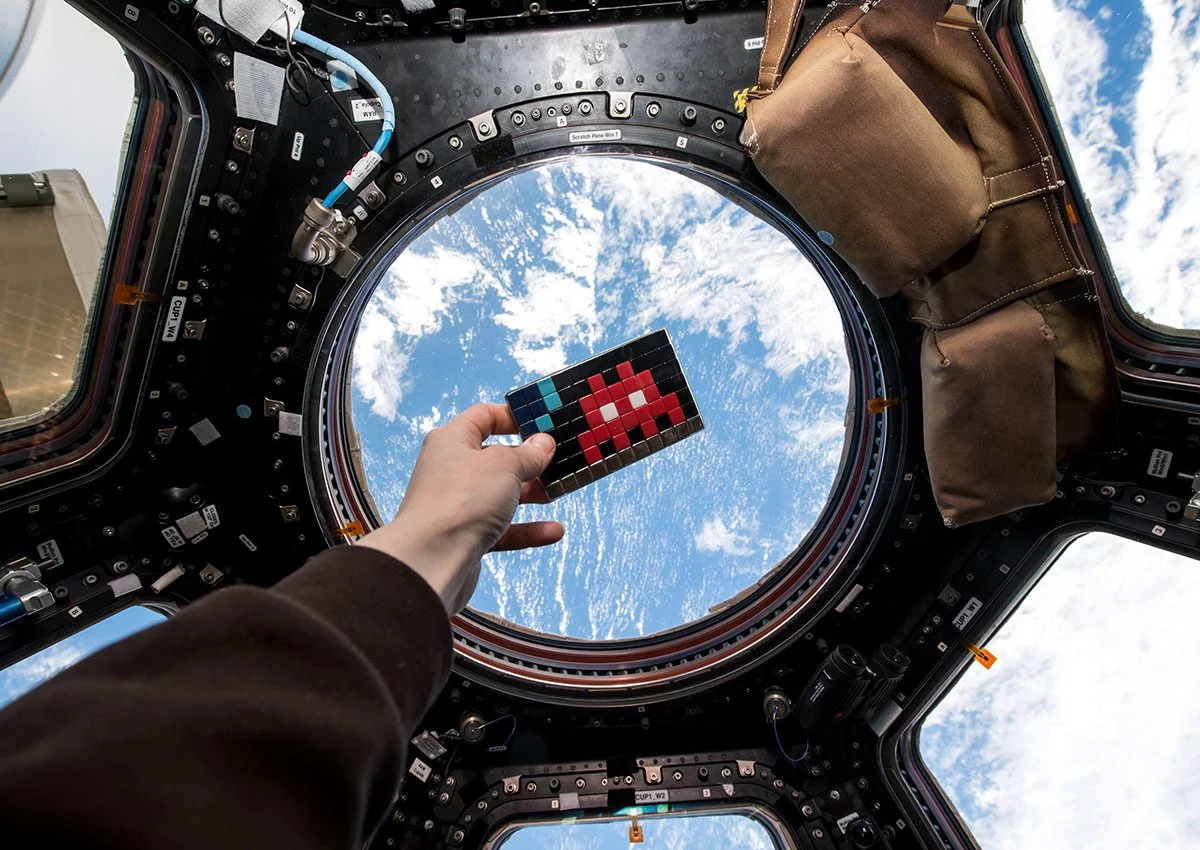
An artist I follow
INVADER
An anonymous artist who uses ceramic tiles to create art in public places.
Most of his artworks are inspired by Space Invaders, a Japanese video game from the 70s and 80s.
He thinks of himself as a hacker of public spaces, and wants people to explore the urban spaces around them.
He calls himself Invader, and his artwork Invasions. So far he has invaded 79 cities in 20 countries.
What do you do if you spot one (he has one on top of the Eiffel Tower)?
You take pictures using his app ‘FlashInvaders’ and get points.
He even has an art installation on the International Space Station. If you point your camera at the sky at the exact moment the space station is above you, you will get your 100 points! Or so goes the claim.
I haven’t tried it yet.
You can read more about him here
Or read a medium article by someone who discovered him by accident here

My notes from ‘ How Different Cultures Defined a Life Well-Spent’
umuntu ngumuntu ngabantu
We are conditioned to put a value on our time and audit our day.
Did we spend it well or did we waste it?
Was it productive or was it unproductive?
We do this even when we take a holiday from being forced to be productive at work.
Did we see enough or do enough to justify the time we took out from work?
But before capitalism put a price on our time and decided it should be productive, people had a different answer to the question “ Is your time well spent?”
To the hunter-gatherers, a good day was one where they made enough to eat for the day.
To the ancient Greeks, a day spent in leisure (reading, thinking, debating) was a day well spent. Work was the interruption. A thing to be avoided. So, they outsourced the work to their slaves and made better use of their day. (I am guessing the slaves had a different point of view.)
To Confucius, a day well spent was one where you became a better human being than when the day began - a day filled with self-realisation, learning and helping others.
In ancient India, a day well spent was one in which you managed to balance 4 aspects of life: your ethical and moral duty (Dharma) , pursuit of a secure life (Artha), pursuit of happiness and joy (Kama), and the pursuit of peace and freedom from needs (Moksha).
Across many cultures in Africa, YOU could not answer if you had spent your day well. It had to be answered by the people around you. Because they believe you are who you are to others.
Or umuntu ngumuntu ngabantu, often translated to ‘I am because we are.’
This video gave voice to that part of my brain that has begun rebelling at this constant feeling that I haven’t Carpe’ed the Diem hard enough.
Maybe the ancients had the right idea all along: a busy person is someone who doesn’t have the time to be human.
You can watch the whole video here